


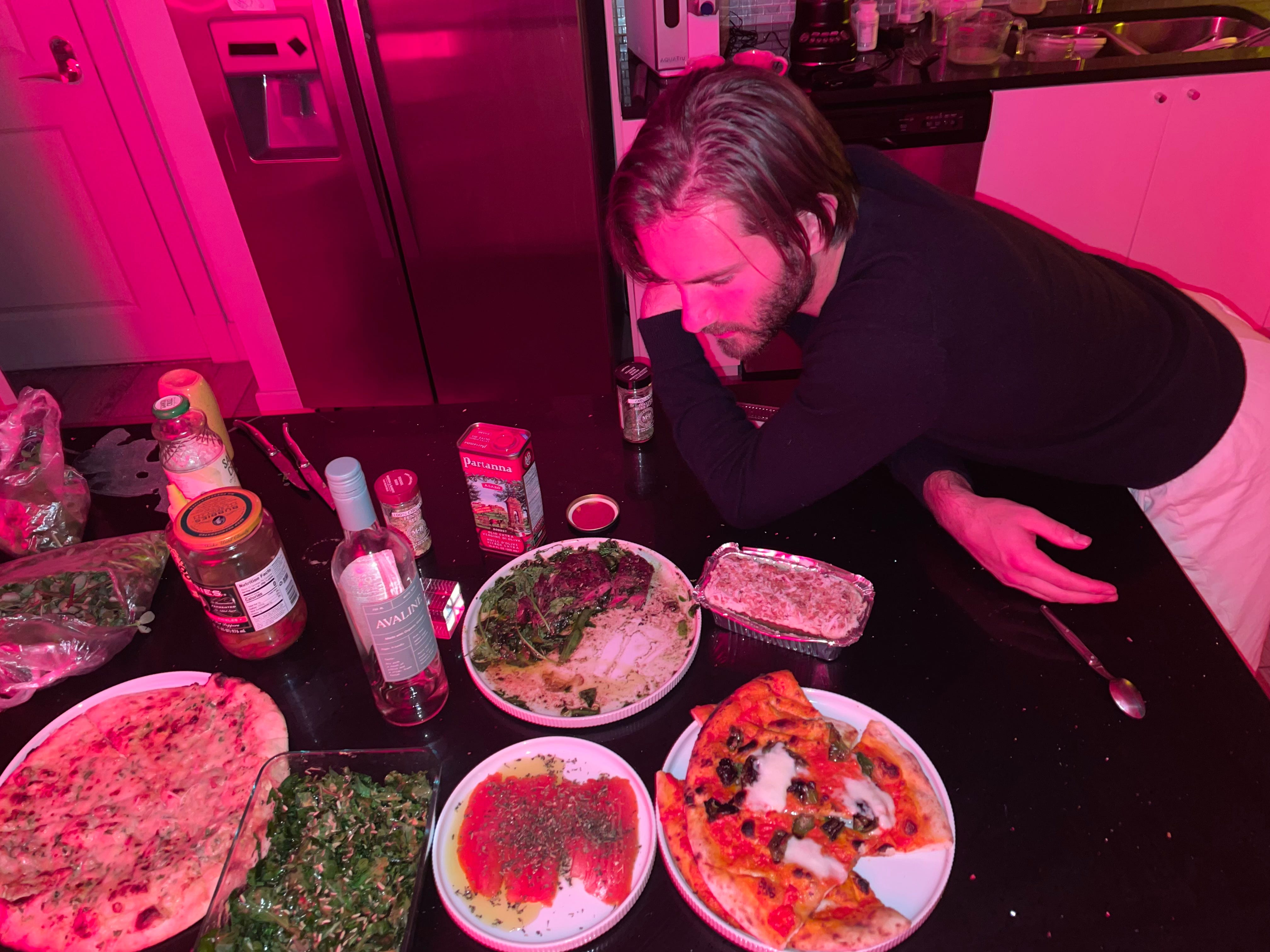
“Every time I go to Italy, I can eat pasta all day, with pizza and wine, and I feel fine—and somehow I even lose weight.”
How many times have you heard that from a friend who just got back from a vacation to Italy?
If you’re anything like me, you’re thinking: How?
And also… a little jealous.
For years, I would eat pasta and pizza and pay the price—bloating, bathroom emergencies, brain fog. The whole tour. But when I was introduced to real Italian pasta—actual noodles from Italy—I knew I was onto something. Something big.
That’s what I want to talk about today: how to hack pizza and pasta back into your life without destroying your gut.Because there is a way. And it starts with one key word:
toxins.
Why Pasta Feels Different in Italy
1. Pesticides, Herbicides & the “Toxin Load”
To understand what we’re dealing with, you have to look at how our wheat is grown and sprayed.
In the U.S., the EPA sets “tolerances” for pesticide residues.
For grains, glyphosate tolerances can go up to several parts per million, and across all crops the allowed range runs roughly from 0.1 up to 400 ppm, depending on the food.
In the European Union, pesticide rules are generally tighter. There’s a default maximum residue level of 0.01 mg/kg (that’s 0.01 ppm) when a pesticide doesn’t have a specific limit, and overall the EU leans on a more precautionary approach to residues.
Some analyses point out that American wheat is more likely to be exposed to glyphosate than European wheat, especially when it’s used as a pre-harvest drying agent.
Functional medicine docs and organizations like the Institute for Functional Medicine talk a lot about how chronic exposure to environmental toxins—including pesticide residues—can disrupt the gut microbiome, damage the intestinal barrier (“leaky gut”), and drive systemic inflammation.
So it makes sense why your stomach might hurt. If your gut lining is already compromised, layering in more pesticide-laden, ultra-processed food is like pouring gasoline on a campfire.
More leaky gut → more immune activation → more “why does pasta feel like an allergic reaction now?”
2. The Wheat Itself: Modern vs. Heritage
The second issue is the grain.
Our great-grandparents were eating older, taller varieties of wheat.
Over the last 50–70 years, modern “dwarf” wheat was bred (not GMO, but aggressively hybridized) to be shorter, higher-yield, and easier to harvest. Functional medicine docs like Mark Hyman have pointed out that this modern dwarf wheat tends to:
Contain more gluten and more types of gliadin proteins (the part of gluten that many people react to).
Contain a form of starch called amylopectin A, which can spike blood sugar aggressively compared to older grains.
None of this automatically makes wheat “evil,” but it does mean that a sensitive, inflamed gut might handle a simple, stone-ground heritage wheat from Italy very differently than a big bowl of modern U.S. dwarf wheat drenched in factory sauce.
In Italy, many producers still grow traditional or heritage wheats and are more likely to use lower-input, smaller-scale farming practices, with less glyphosate exposure compared to typical American commodity wheat.
That’s one reason some people who can’t touch pasta in the U.S. find themselves absolutely inhaling it on a piazza in Florence without feeling wrecked.
3. Five Ingredients vs. 25
Real pasta is stupidly simple:
Wheat + water (maybe eggs)
Tomatoes, olive oil, herbs, salt
Optional: a little meat, cheese, garlic
That’s, what, 5–10 ingredients?
Walk into a typical American grocery store, grab a cheap jar of sauce, and flip it around. Many brands are packed with:
Added sugar or high fructose corn syrup
Refined seed oils (soybean, canola, sunflower)
“Natural flavors,” gums, stabilizers, preservatives
Tomatoes grown in heavy pesticide systems, sometimes from concentrates
The U.S. also permits a wide range of food additives that the EU either bans or restricts more tightly—colorants, emulsifiers, preservatives—thanks to looser “generally recognized as safe” standards on our side of the Atlantic.
Layer that on top of a fragile gut and it’s no wonder a jar of “grandma’s homestyle” sauce can leave you bloated, inflamed, and mentally wrecked.
Even with olive oil, a lot of cheap “extra virgin” in the U.S. is either low-quality, cut with cheaper vegetable oils, or oxidized from heat and light. Meanwhile, fresh high-polyphenol oil—the stuff that bites the back of your throat—is actually anti-inflammatory and can support gut and cardiovascular health.
4. What about Wine?
Then there’s wine.
The U.S. allows dozens of additives in winemaking—color enhancers, flavoring agents, fining agents, stabilizers—and winemakers don’t have to list most of them on the bottle. Some estimates put the number of legal additives at 60–70+ in the U.S., with a subset considered potential health hazards.
Sulfites are another piece. In the U.S., wines can legally contain up to 350 ppm of sulfites. In Europe, limits are generally lower, especially for organic and biodynamic wines, and those systems forbid synthetic chemical additives altogether. Many natural/biodynamic wines clock in closer to 10–30 ppm.
So if you’re pairing a giant bowl of industrial wheat with a sauce full of sugar and seed oils and washing it down with high-additive, high-sulfite wine… yeah, you’re probably going to wake up anxious, inflamed, and hungover—with a wrecked gut to match.
5. Culture
Here in America, even when we eat “healthy,” we often eat stressed, rushed, and distracted. I’m guilty too—phone in hand, laptop on, solving problems between bites. It’s not just what you’re eating. It’s how you’re eating it.
In most European countries, eating—especially dinner—is an event. People sit, talk, linger. They’re not inhaling food in the car, doom-scrolling in front of Netflix, or arguing in Slack between bites. They’re parasympathetic: social, relaxed, present.
Functional medicine people talk a lot about this “rest-and-digest” state. When you’re calm and connected:
Cortisol drops
Stomach acid and digestive enzymes rise
Blood flow shifts toward the gut instead of “fight or flight”
All of that literally makes your gut better at breaking down food and less likely to freak out.
Hope (Without Moving to Rome)
When I first dug into all of this, I felt shocked, disturbed, and honestly a little disheartened.
But there were a few signs pointing in a hopeful direction:
Italian and European products are already here.
A lot of heritage or organic Italian pastas, canned tomatoes, and sauces are quietly sitting on American shelves—you just have to know what to look for. (I’ll share my vetted favorites at the end.)High-polyphenol olive oil is shippable.
There are legit olive oil clubs and small producers importing fresh, lab-tested, high-polyphenol oils that taste like that throat-punch Tuscan stuff we talked about.Better wine exists.
Companies like Dry Farm Wines and other natural/biodynamic importers specialize in low-sugar, organic, lower-sulfite wines that are lab-tested for purity.
So even if you’re in a tiny hometown or a hectic American city, you don’t have to give up on the magic of Italian food. Y
ou can still taste Rome from your kitchen—you just need to be more intentional about where your wheat, tomatoes, olive oil, and wine are coming from, and how you show up to the meal.
How to Build a Biohacked Pasta Night
These are the actual resources I reach for when I want to eat like an Italian nonna who goes to a functional medicine doctor.
🍝 Pasta (Noodles)
Bionaturae Organic Sourdough / Durum Pasta – Italian-made, organic, slow-dried, with options like organic sourdough fusilli and classic durum wheat shapes. Clean ingredients, great texture, made by Italian pasta artisans. (Jovial Foods, Inc)
Other good cues if you’re shopping local:
“Product of Italy” on the label
Organic, stone-ground, or heritage/ancient grain
Ingredients list that’s basically: organic wheat, water (and maybe egg)
🍅 Tomato Sauce / Tomato Base
Bionaturae Organic Pasta Sauces & Tomato Products – Organic tomato basil, marinara, strained tomatoes, etc., in glass jars and bottles—simple ingredient lists, organic Italian tomatoes. (Jovial Foods, Inc)
Bio Orto – Organic Italian sauces like their Organic Puttanesca and organic datterini tomatoes; super clean and very “I’m secretly in Rome right now.” (Eataly)
Look for: tomatoes, olive oil, onion, garlic, salt, herbs. No canola/soy/“vegetable oil,” no sugar or corn syrup, no “natural flavors.”
🫒 Olive Oil
Fresh-Pressed Olive Oil Club – Quarterly shipments of fresh-harvested, high-polyphenol oils from small farms around the world. Great way to reset your palate on what real EVOO tastes like. (Fresh-Pressed Olive Oil)
Dr. Cowan’s Garden High-Polyphenol Greek EVOO – Super potent, single-estate Greek olive oil with very high polyphenol content, meant as a kind of “medicinal” olive oil. Strong, peppery, legit. (Dr. Cowan’s Garden)
If you’re at Whole Foods or a local store: grab dark glass bottles, a clearly listed harvest date, and oils labeled extra virgin, cold-pressed, single estate when possible.
🌿 Herbs & Spices
Simply Organic – Organic dried basil, oregano, thyme, red pepper flakes, garlic powder, etc. Reliable, easy to find, and actually taste like something. (Simply Organic)
Stack these with fresh herbs from the produce section or your windowsill for extra polyphenols + flavor.
🥩 Meat for Bolognese
Force of Nature – Regeneratively raised, 100% grass-fed and pasture-raised meats: ground beef, bison, venison, and “ancestral blends” with organs. Great for nutrient-dense bolognese. (Force of Nature Meats)
Frankie’s Free Range Meat – Grass-fed, grass-finished beef and other pastured meats, cut to order and shipped frozen. Very nose-to-tail, nutrient-dense vibe. (Free Range Fulfillment Services)
If you’re shopping in person: look for 100% grass-fed and finished beef or high-quality pastured pork/sausage with no weird fillers or seed oils.
🧂 Salt
Diamond Crystal – Their kosher salt and sea salt are additive-free, widely used by chefs, and easy to find. Great for salting pasta water and seasoning everything. (diamondcrystal.com)
Use it like the Italians: salt your pasta water until it “tastes like the sea” and don’t be shy about seasoning.
🍷 Wine
Dry Farm Wines – A natural wine club that sources organic, low-sulfite, sugar-free wines that are lab-tested for purity (low alcohol, no additives, small family farms). Perfect if you want wine but hate the anxiety/hangover. (Dry Farm Wines)
In-store move: look for Italian organic or biodynamic wines (DOC/DOCG, organic logo, or Demeter biodynamic logo) at Whole Foods or a good local wine shop.
Screenshot this list and bring it with you to the store, or keep it open while you build a little Italian aisle in your pantry.
Conclusion
Pasta night, at its core, is a reflection of what’s good in life.
Sitting down for dinner.
Amazing food.
People you love.
Forgetting your disasters for a second and just being a human at a table.
It’s elbows on the table, a little red wine in a chipped mug, laughing about calling your boss the wrong name or realizing you wore your shirt inside out all day. It’s letting the playlist run, letting the sauce simmer, letting the night breathe.
When we choose better ingredients and a calmer culture around food, we’re not just “being healthy.” We’re eating in a way that actually nourishes us and gives us energy to do all the wild, creative, purpose-filled things we’re here to do.
Whatever it is, you don’t have to give it up. You just have to learn how to upgrade it.
So here’s my ask:
Go make your own version of pizza and pasta night.
Turn off the screens. Turn on some music. Get good ingredients. Sit down with someone you love—or with yourself, if that’s where you’re at right now.
Then tell me how it went.
What did you make? How did you feel? What do you want me to biohack next—risotto? Lasagna? Rice night?
I got you. Love you. Thanks for being at this table with me. 🍝🫒🍷
I’ve experienced this first-hand. Great summary!