


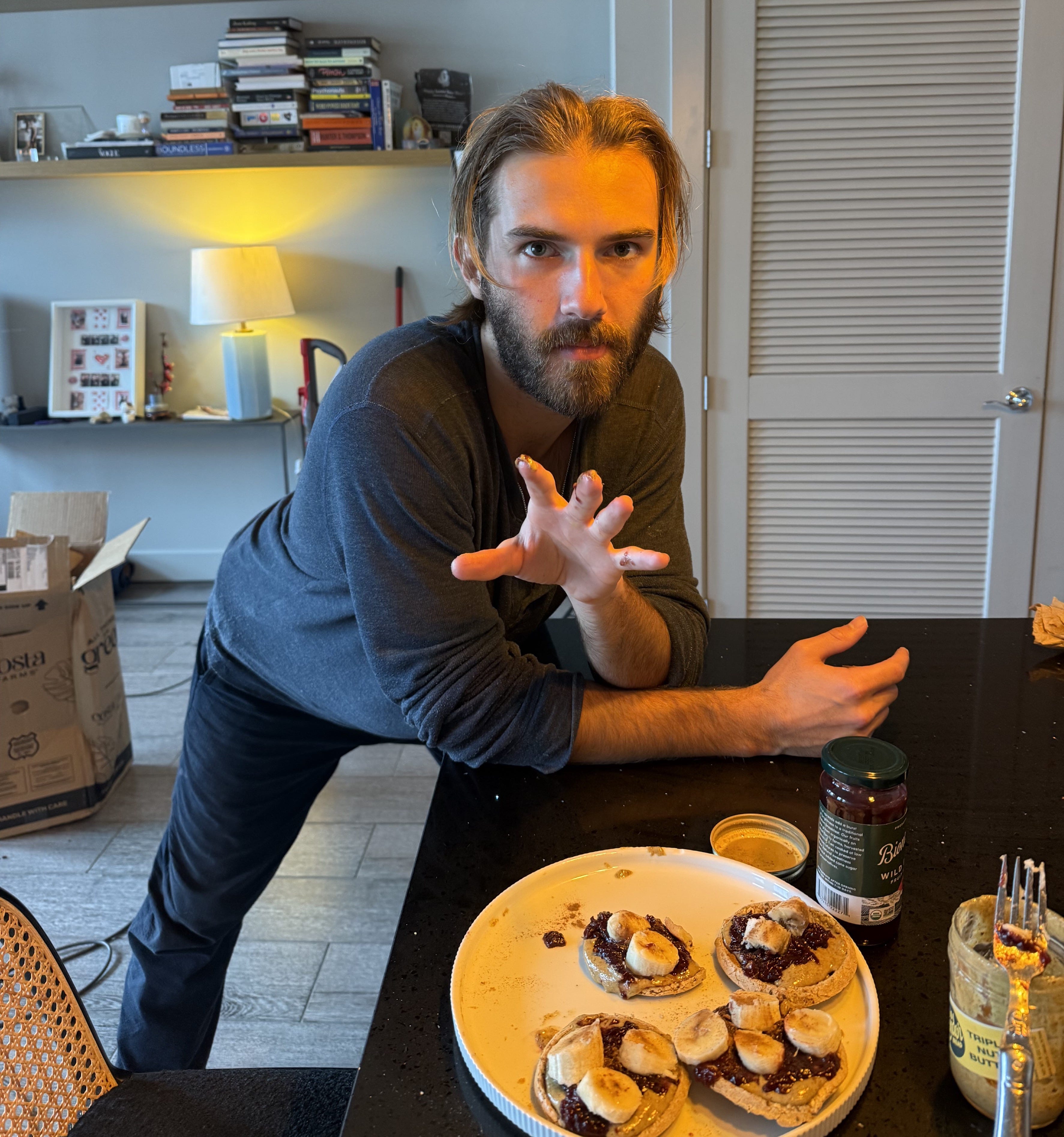
I love PB&J.
If I was sentenced to death, and had one last meal, it would be some form of PB&J.
Instead of peanut butter it might be walnut butter, or cashew butter — maybe even the OG, almond butter.
I haven’t decided yet.
What I have decided though is that PB&J is the shit.
It got me through childhood, puberty, college, and even to this day at 24.
I have everything to thank it for — yet I’ve unfortunately learned the dark side to this delicious snack / meal / too-hungry-because-high-on-adrenal food.
The PB&J Predicament
Most PB&Js are unhealthy because of the quality of ingredients — not the sandwich itself.
Here’s what that actually means when you’re in the supermarket 👇
🥜 Peanut Butter
Aflatoxins (mold toxins): Studies show many conventional peanut products contain detectable levels of aflatoxins — mold toxins that can burden the liver and, in high or chronic doses, affect brain and energy metabolism.📚 World Health Organization, 2018 – “Aflatoxins and Food Safety”
Pesticides & Glyphosate: Peanuts are often sprayed with glyphosate-based herbicides before harvest. Emerging research links glyphosate exposure to gut microbiome disruption and intestinal barrier damage.📚 Environmental Health Perspectives, 2021
Histamine Sensitivity: Peanuts are high-histamine foods — meaning if you often feel bloated, anxious, or itchy after eating them, your body might be reacting to histamine overload.📚 American Journal of Clinical Nutrition, 2020
🍞 Bread
Refined Flour = Sugar Spike: Most supermarket breads use bleached, refined flour — your body digests it like sugar, spiking glucose and insulin. 📚 Nutrients, 2018 – “Refined Carbs and Metabolic Health”
Glyphosate & Gut Health: Conventional wheat is often desiccated with glyphosate before harvest. Research links this to changes in gut microbiota composition and tight-junction damage (“leaky gut”).📚 Environmental Health Perspectives, 2021
🍓 Jelly
High-Fructose Corn Syrup (HFCS): Found in most commercial jellies and linked to non-alcoholic fatty liver disease and mitochondrial dysfunction when consumed regularly. 📚 Nutrients, 2020 – “HFCS and Liver Function”
Additives & Dyes: “Natural flavors,” preservatives, and artificial dyes can alter gut bacteria and increase inflammation in sensitive individuals.📚 Frontiers in Nutrition, 2022
Blood Sugar & Cravings: Sugary jellies feed bad gut bacteria, raise insulin, and make you tired and hungry again.
TL;DR
If I kept eating the classic Jif peanut butter + white bread + Smucker’s jelly combo we all grew up with —
I’d likely be contributing to increased intestinal permeability, microbiome imbalance, and systemic inflammation.
🧠 The Biohacked PB&J
But there’s no way I’m restricting myself or my life.
Life’s too short, food’s too tasty — and after reading literature from all around the world, I’ve come to understand:
✅ Some nuts and seeds are good for you.
✅ Some bread can actually help your gut.
✅ Some jellies contain missing nutrients we all need.
After experimenting, I cracked the code on what these missing nutrients are — for our gut, our cells, and our energy in general.
🥜 1. Forget Peanuts — Try Their Cousins
Almonds, walnuts, and macadamias are lower in mold risk, higher in anti-inflammatory fats, and loaded with micronutrients.
Look for butters that are:
Sprouted: reduces phytic acid by up to 77%, improving mineral absorption and digestion (Frontiers in Nutrition, 2022).
Stone-ground or raw: preserves delicate fats and nutrients.
Packaged in glass: avoids microplastic leaching and xenoestrogens.
If you’re sticking with peanut butter, choose organic, tested-for-mold varieties and store them in a cool, dry place.
Resources & Picks:
🍞 2. Skip White Bread — Try These Instead
Refined white bread spikes blood sugar, feeds inflammatory gut microbes, and offers little fiber or resistant starch.
Instead, reach for:
Sprouted grain breads: enzyme-rich, higher in minerals.
Sourdough: naturally fermented, lower in gluten, promotes SCFA production.
Buckwheat bread: technically a seed, gluten-free, rich in rutin for vascular health.
📚 PMC, 2021 – “Sourdough Fermentation and Glycemic Response”
→ Sourdough fermentation reduced glycemic response by 25% and boosted beneficial bacteria like Lactobacillus and Bifidobacterium.
Resources & Picks:
🍓 3. Get Wild-Berry, Polyphenol-Rich Jelly
Polyphenols — especially anthocyanins — in berries are linked to improved cognition, reduced inflammation, and lower cardiovascular risk.
📚 Harvard Health, 2020 – “Anthocyanins and Heart Health”
Instead:
Use fruit-only spreads with no added sugars — like Bionaturae from Italy.
Or make your own: simmer organic berries with chia seeds, lemon, and monk fruit for a fiber-rich, microbiome-friendly jam.
Resources & Picks:
✨ Additional Superfood Add-Ons
Ceylon cinnamon: lowers post-meal glucose, activates sirtuins (longevity genes). Diabetes Research & Clinical Practice, 2020
Ground flaxseed: adds fiber + omega-3s, supports estrogen metabolism.
Raw honey (unheated): prebiotic + antimicrobial; supports gut healing.
Sea salt: trace minerals, supports adrenal function under stress.
Sprouted buckwheat granola: crunch + resistant starch + polyphenols.
Organic fruit slices (banana, kiwi): potassium + dopamine precursors for mood.
❤️ Final Word
It was never about the bread, the jelly, or the nut butter that made PB&J “bad.”
It was always about the quality.
The new PB&J is something you can eat and feel good about.
(Yes, don’t eat it for breakfast, lunch, and dinner… but you could.)
And maybe — you might do something spectacular on it.
For now, I’ll keep adding a BWJ to my lunch, feed it to my future kids, and biohack TF out of it.
Because when you eat something that’s truly alive — you can feel it.
Love y’all,
Jack (Biohack with Jack)
💬 If you make your own Biohacked PB&J this week, tag me on Instagram or Substack — I wanna see your version.
References
World Health Organization. Aflatoxins and Food Safety. 2018.
Environmental Health Perspectives. “Glyphosate-Based Herbicides and Gut Microbiome Disruption.” 2021.
American Journal of Clinical Nutrition. “Histamine Intolerance and Food Sensitivity.” 2020.
Nutrients. “Refined Carbohydrates and Metabolic Health.” 2018.
Environmental Health Perspectives. “Glyphosate and Intestinal Barrier Integrity.” 2021.
Nutrients. “High-Fructose Corn Syrup and Liver Function.” 2020.
Frontiers in Nutrition. “Food Additives and Gut Microbiota.” 2022.
UK Biobank Cohort Study. “Ultra-Processed Foods and Systemic Inflammation.” 2023.
Frontiers in Nutrition. “Effect of Sprouting on Phytic Acid Reduction and Nutrient Bioavailability.” 2022.
PMC. “Sourdough Fermentation Reduces Glycemic Response and Modulates Gut Microbiota.” 2021.
Harvard Health. “Anthocyanins and Heart Health.” 2020.
Diabetes Research & Clinical Practice. “Ceylon Cinnamon and Postprandial Glucose Control.” 2020.
Frontiers in Nutrition. “Alpha-Linolenic Acid and Brain Function.” 2022.
Nutrients. “Polyphenols and the Gut-Brain Axis.” 2020.
Journal of Cereal Science. “Nutritional Benefits of Sprouted and Fermented Grains.” 2019.
American Journal of Clinical Nutrition. “Macronutrient Composition and Postprandial Glucose Response.” 2021.
I truly thought I was the only one who knew about Pacha bread… their English muffins are a staple in this household !!
This is awesome. I currently buy organic pb but didnt know about the mold thing! Thanks for the links. Even when you shop by reading labels its hard to find a quality product. I end up choosing "the least offensive" at any given store. I'm burnt out on deep diving healthy food, so this is much appreciated. 🙏🏼🌈☀️🧡🤘🏻