


Your bed isn’t comfortable; it’s a magnetic force field pulling you deeper into the mattress.
You hit snooze.
Ten more minutes, you tell yourself, but when the bell rings again, you feel twice as heavy.
I know that quicksand well. I spent years as the guy who couldn’t crawl out of bed before noon, convinced I wasn’t a “morning person.”
But the truth is, I didn’t lack motivation; I found myself trapped in a biological loop.
To escape the “death threat” of your morning alarm and turn your bedroom into a launch pad, you first need to understand why your bed feels so cozy.
1. The Sleep Inertia Trap
Your bed is never more delicious than at 6:30 AM.
It feels like a warm, gravity-defying sanctuary because of a phenomenon called Sleep Inertia.
Recent studies show that about 57% of adults are “habitual snoozers.” They spend an average of 24 minutes feeling groggy and half-awake.
When you hit that snooze button to buy ten more minutes of bliss, you aren’t actually resting. You are forcing your brain to reset a deep sleep cycle, only to snap it again minutes later.
Scientists call this “sleep drunkenness.” It’s why you feel more tired after 20 minutes of snoozing than when the first alarm went off.
How To Prep The Night Before
You can’t have a successful launch if your systems are glitching.
To make the 5:00 AM transition feel less like a “death threat,” you have to optimize the “shutdown” phase:
The 3-2-1 Rule:
Stop eating 3 hours before bed.
Stop working 2 hours before bed.
Eliminate blue light (screens) 1 hour before bedtime.
This allows your natural melatonin to actually do its job.
The Temperature Drop: Your body needs to drop its core temperature by about 2-3 degrees to fall asleep. Keep your room at 18°C (65°F). A cool room makes the “quicksand” of the bed less sticky in the morning.
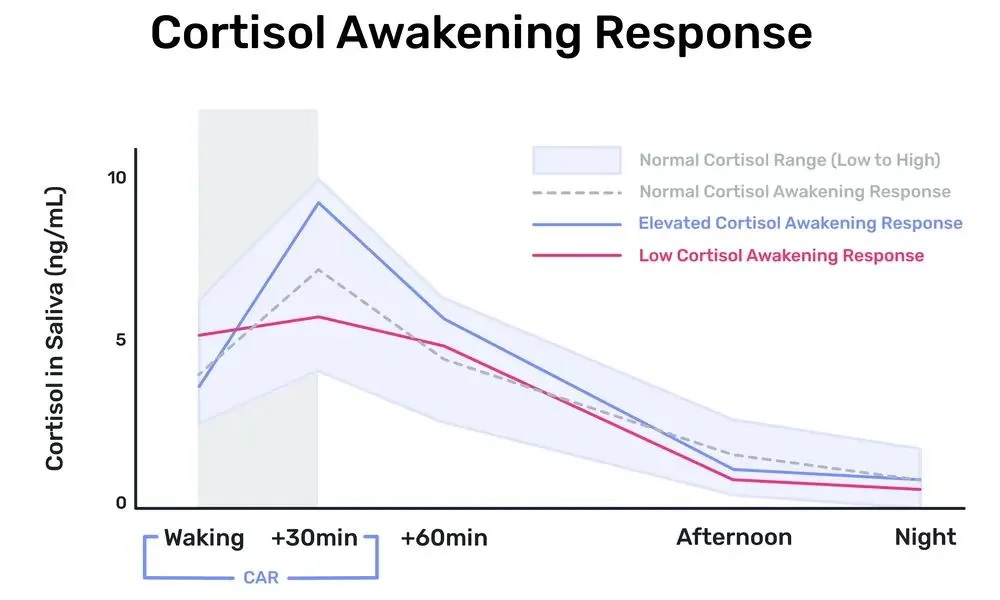
2. Prime Your Cortisol Awakening Response (CAR)
Your body is actually designed to wake up before your alarm. About an hour before you wake up, your body starts the cortisol awakening response (CAR). This is a natural boost that gets you ready for the day.
When you treat your alarm like a surprise attack, you disrupt this process. To turn your bedroom into a launch pad, you need to sync with this response.
The easiest way? Light.
Using a sunrise lamp or leaving your blinds cracked signals to your brain that the “launch” is near. This way, the first alarm feels like a natural transition instead of a shock.
Also, by waking up and turning on lights in the house, you signal this healthy cortisol response. I use sunlight-mimicking bulbs by Bon Charge throughout my house. They work wonders.
3. Re-Engineering the “First Move”
If your alarm is within arm’s reach, you’ve already lost. In my noon-riser days, my phone was my pillow. Now, it’s across the room.
To break the cozy bond, follow one rule: the five-second rule for your feet.
The Proximity Hack: If you have to walk to kill the noise, the “sleep drunkenness” spell is already 50% broken.
The Water Shock: I keep 16 oz of water next to my alarm. Drinking it right away kickstarts your metabolism. It also clears sleep chemicals from your brain.
Morning Sunlight: Once you’re up, get outside. Five to ten minutes of direct morning sunlight helps set your circadian clock. Make sure it’s outside, not through a window. It tells your brain exactly when to start the countdown to sleep again.
The Noon-to-5 Transformation: > “I didn’t move my wake-up time from 12 PM to 5 AM overnight. I moved it by reframing the alarm. It’s no longer the end of sleep; it’s the start of the mission.”
📋 The 5 AM “Battle Station” Checklist
Cool Room: Set to 65-67°F for deeper recovery.
Light Trigger: Smart lights or open blinds to signal your CAR.
Distance: Move the alarm 10 feet away from the mattress.
Hydration: Drink 16 oz of water before your brain can talk you out of it.
The 30-Second Move: Do 10 air squats. Physical movement is the fastest way to kill sleep inertia.
Sunlight: View the sun within thirty minutes of waking.
The Verdict
Your alarm doesn’t have to be a death threat.
Understanding sleep drunkenness can help you improve your room for better rest. This way, you avoid the “cozy trap.”
The bed is a great place to rest, but it’s a terrible place to live. Stand up on the first ring; your future self is already waiting for you at 5:00 a.m.
If you’re tired of guessing, let’s build your protocol.
I help people ready to work with their biology, not against it.
In a free 30-minute Biohack Strategy Call, we will:
✅ Identify your morning bottleneck (cortisol, blood sugar, sleep, or nervous system).
✅ Map your current routine and find the 2-3 key changes.
✅ Create a personalized wake-up protocol that doesn’t need superhuman willpower.
This isn’t a sales call. It’s a diagnostic session. You’ll gain clarity on what’s broken and a plan to fix it—whether you choose to work with me or not.
Reply and share your biggest morning struggle. I’ll send you a personalized breakdown of what’s likely happening and how to fix it.