

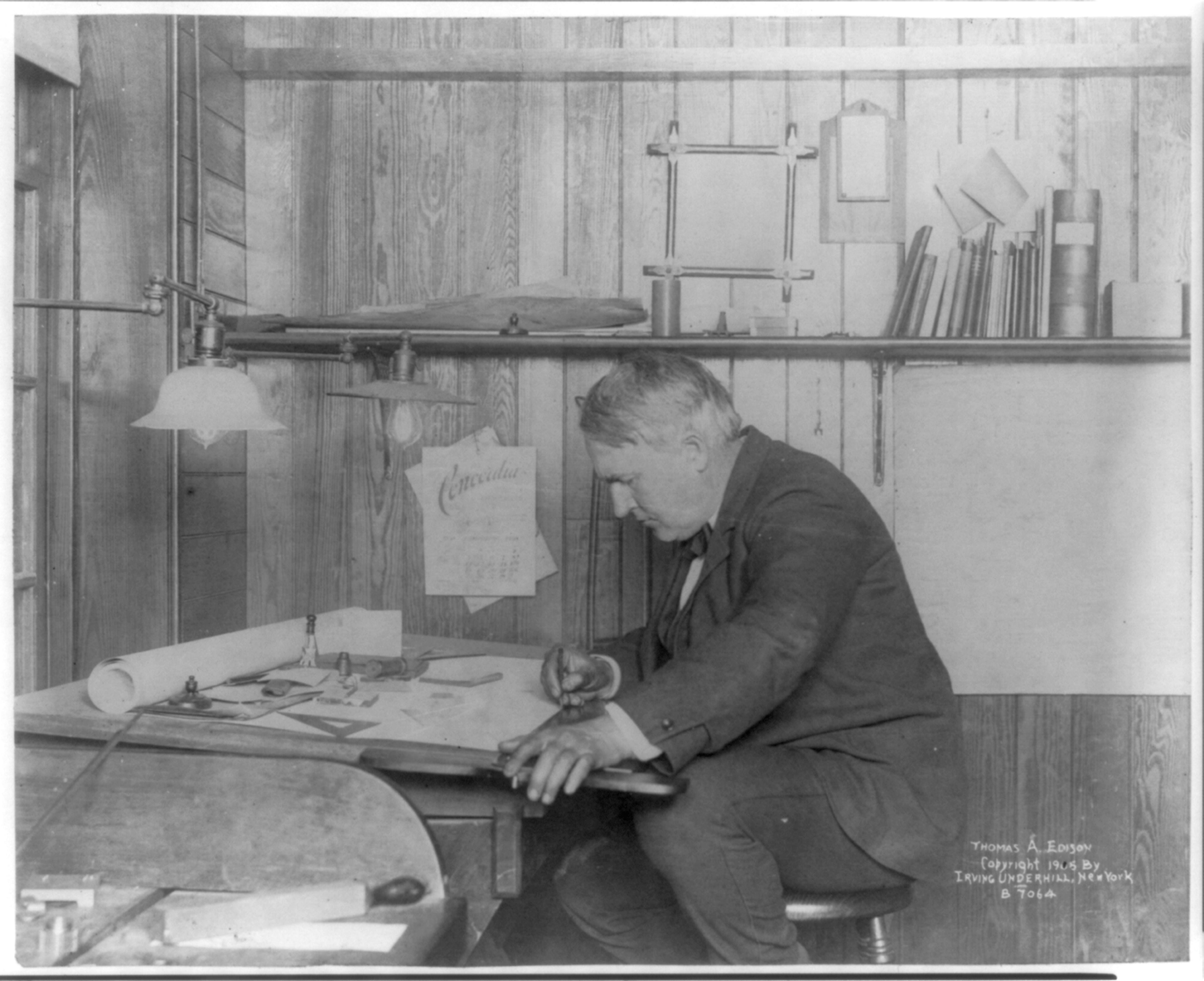
"The electric light has caused me to work over 40 years at night."—Thomas Edison
Some of the greatest minds in history were night owls.
For instance, Thomas Edison, a man who saw sleep as a “criminal waste of time.”
His relentless work ethic kept him in the lab well past 2 AM, testing filament after filament in his pursuit of the electric light bulb. To stay awake, he drank Vin Mariani—a Bordeaux wine infused with coca leaves. Essentially, cocaine-laced wine.
Maybe you can relate.
Maybe the only time you can truly focus—or the only time you have—to write your Substack newsletter, study for an exam, or disappear down a YouTube rabbit hole is at night.
Maybe like Edison, you make yourself a warm coffee (or, if you're feeling bold, a glass of Vin Mariani), settle into your workspace, and finally get to work when the world quiets down.
But, of course, there’s a catch.
Sleep expert Matthew Walker puts it bluntly:
"The shorter your sleep, the shorter your life span."
Without it, energy plummets, the body deteriorates, and performance—both mental and physical—tanks.
So how do you balance the creative magic of late-night work without wrecking your sleep?
That’s what this article is about.
You’ll learn how to tap into deep creative flow at night—without paying the price in the morning. I’ll show you how to:
Access deep focus and flow without tanking melatonin.
Set up your environment to work and sleep better.
Wind down effectively after an intense session.
Use supplements to help you sleep deeply and wake up energized.
Let’s get into it.
Why Late-Night Flow Feels Different
For the past five years, I’ve been DJing techno and house clubs in Dallas—playing packed raves that stretch until 5 AM. The energy is electric. The music pounds, bodies move, and time bends. I’ll get so locked into a mix that I look up, and suddenly, 30 minutes have vanished. That’s flow state.
Mark Manson puts it best:
"You know you’re in a flow state when you forget to eat, sleep, and poop."
And nighttime flow? It hits differently than the daytime grind.
Everything shifts. Serotonin rises, prepping your body for sleep—but before it converts into melatonin, it fuels joy, curiosity, and creativity.
Maybe that’s why some of the best ideas strike at night.
No notifications. No distractions. No one demanding your attention. Just you, a quiet world, and deep, uninterrupted time.
Either way, if you find yourself most alive at night, it’s not a random preference. It’s likely wired into your biology.
Your Chronotype: Why Some People Thrive at Night
Funny enough, you do have a spirit animal—and it determines when you naturally like to sleep.
For me, I’ve fully embraced the fact that I love falling asleep around 9:30 PM, snuggling in until at least 5:15 AM, then jumping out of bed to start work by 7 AM. That makes me a Lion—an early riser who thrives on a structured morning routine.
You, on the other hand, might be more of a Wolf—someone who hits peak productivity at night and struggles to wake up early. Just like Edison.
Dr. Michael Breus, a leading sleep expert, created the Chronotype System to categorize different sleep patterns—explaining why some people naturally wake up early while others do their best work when the world is asleep.
The Four Chronotypes
🟡 The Bear – Follows the sun naturally, with peak productivity in the morning to early afternoon.
🦁 The Lion – Wakes up early, thrives on an early schedule, but crashes in the evening.
🐺 The Wolf – Peak creativity in the evening, struggles to wake up early.
🐬 The Dolphin – Light sleeper with fragmented sleep cycles, often struggles with focus.
These chronotypes are wired into your circadian rhythm—your body’s internal clock that regulates sleep, wakefulness, digestion, and even cognitive performance.
And it turns out, this variation isn’t just random. It actually helped us survive in nature.
As Ben Greenfield explains:
"From an evolutionary standpoint, this variation in chronotype makes sense. Since our ancestors lived in groups, having a variety of natural sleep and wake times meant that someone was awake to ensure security for the group at all hours."
When you align with your natural rhythm, life flows better.
Curious about yours? You can take Dr. Michael Breus’ Chronotype Quiz to find out your sleep spirit animal.
Why You Struggle to Fall Asleep a Night Flow
We totally get why you love your night flow—it's powerful.
But we still need to be smart about sleep. There’s just one big challenge we have to tackle: light. It’s the one force that can throw everything off.
If you didn’t already know, artificial light is insidious to your biology. It’s everywhere—your phone, your laptop, your car, even your fridge.
And the problem?
Light is the primary cue for your circadian rhythm.
During the day, bright light spikes dopamine, halts melatonin, and revs up metabolism and stress hormones like cortisol and norepinephrine—priming your body for energy and activity. At night, the opposite should happen: cortisol should drop, melatonin should rise, digestion should slow, and your body should start winding down.
But when you expose yourself to artificial light at night—whether by doomscrolling TikTok on full brightness or doing night work—you’re sending your body a completely different message.
As Andrew Huberman puts it:
"Artificial light at night isn’t just delaying sleep—it’s disrupting every biological process that depends on circadian rhythm. Your body has no idea what time it is."
The Science on Blue Light & Sleep Disruption
🔹 Melatonin Suppression – A study in PNAS found that exposure to LED screens before bed reduces melatonin by 23% and shifts sleep cycles by over an hour.
🔹 Increased Cortisol at Night – Instead of winding down, blue light exposure triggers cortisol production, keeping your nervous system wired.
🔹 Delayed Sleep Onset – Just 30 minutes of blue light exposure at night can delay melatonin release by 90 minutesand reduce deep sleep by 50%.
🔹 Retina Damage & Skin Aging – Chronic blue light exposure increases the risk of macular degeneration and impairs collagen production, leading to premature aging, dryness, and increased skin sensitivity.
My Own Struggle with Post-DJ Sleep Disruption
One of the biggest reasons I stopped DJing every weekend was that no matter how much I optimized my health, my sleep still got wrecked.
I’d leave a set at 3 AM, wired but exhausted. My body had no idea what time it was. My brain was still buzzing from all the lights, music, and energy. I’d crash at 5 AM, wake up at noon, and feel completely out of sync.
That’s the paradox—flow states feel amazing in the moment, but if they interfere with your sleep, they can wreck your next day.
But now, with the tools I’m about to show you, I’ve developed a protocol that lets me DJ, work late, or enter a deep flow state at night—while still setting myself up for great sleep and peak performance in the morning.
You don’t have to choose between flow and sleep—you just need to know how to hack the system.
How to Tap Into Flow Faster
My flow state routine looks like this:
Yoga, animal flow, and foam rolling → Hapé & Zen EO Spray (Mitozen) → 20 minutes of breathwork with 432Hz frequencies → Manifestation practice → Kion aminos, creatine, and nootropics → Deep work.
I do this before every work session because, frankly, it makes getting into flow easier.
Here are some tips to tap into flow faster.
1. Set a Pre-Work Ritual
Make a cue-based habit before deep work—drink tea, play binaural beats, light a candle.
Start with an easy win (journaling, free writing, or brainstorming) to build momentum.
2. Create a Distraction-Free Zone
Turn off notifications, use “Do Not Disturb,” and wear noise-canceling headphones.
If your space is noisy, pink noise or deep-focus music can help.
3. Move & Breathe Before Work
5 minutes of stretching or deep breathing boosts oxygenation and primes focus.
My favorite breath-work channel.
4. Use the Pomodoro Technique
Work for 30 minutes, take a 5-minute break, repeat.
Think of this like training in the gym—you’re building mental endurance over time.
5. Avoid Doomscrolling & Social Media Dopamine Traps
TikTok, Instagram, and YouTube Shorts are flow-state killers.
Solution: Use a website blocker like Freedom or Cold Turkey to remove temptation.
6. Smart Stimulants for Late-Night Focus (No Caffeine Required)
Caffeine’s half-life means if you drink it past 4 PM, it can wreck your sleep.
Instead, try:
🔹 Paraxanthine – A cleaner caffeine alternative that wears off faster.
🔹 Nicotine (not cigs) – 1-3mg gum or lozenge enhances focus.
Optimize Your Environment for Deep Flow & Quality Sleep
Your environment plays a massive role in how deeply you drop into flow. There’s actual science behind this—your surroundings affect dopamine, stress levels, and cognitive function.
As Steven Kotler (Flow Research Collective) puts it:
"Your ability to get into flow is directly tied to how well your environment supports focus. The fewer distractions, the faster you can drop in."
So, don’t expect to hit deep flow in a cluttered room with blinding LED lights blasting your eyeballs.
Your workspace should signal to your brain: It’s time to lock in.
But at the same time, if you’re working at night, you have to be strategic about how you set things up—because the same environment that helps you focus can also wreck your sleep.
Let’s get into the tweaks that make deep nighttime work seamless—without tanking melatonin or leaving you wired at 3 AM.
How to Build Your Own Flow-Friendly Setup
1. Essential Oils & Scent-Based Brain Stimulation
Diffuse lavender or chamomile to relax your nervous system.
Need alertness? Try orange or bergamot—studies show citrus scents boost dopamine and mental clarity.
Want deep, creative work? Sandalwood and rosemary help with memory recall and cognitive function.
2. Soundscapes
Play theta waves, lo-fi, or binaural beats—these sound patterns enhance concentration and creativity.
One of my favorite apps, Brain.fm, lets you layer focus and relaxation frequencies—so you’re locked in but not stressed out.
3. Lighting & Work Ambiance
Soft, warm lighting helps your brain ease into flow (avoid harsh LEDs).
Protect Your Melatonin Production While Working
Working late at night doesn’t have to wreck your sleep—if you protect yourself from the biggest culprit: blue light.
Here’s how to work at night without confusing your circadian rhythm:
1. Blue Light Blockers: The Most Complimented Item I Own
The one item that gets me the most compliments? My blue light blockers.
I wear them everywhere—from the office to the club, to taco dinners, and beyond.
They’re not just a fashion statement. They block harmful artificial light while still allowing me to see perfectly at night. Plus, they look great.
The best blue blockers I’ve used are RA Optics, made by a guy named Matt Maruca who’s obsessed with light science. They’re third-party tested, and they actually work.
PS: Don’t buy Amazon knockoffs. You’ll waste $50 on something that does nothing. If you care about your health, invest in a real pair.
2. Protect Your Screens (If Glasses Aren’t Your Thing)
If blue light blockers aren’t your vibe, you can hack your screens instead:
🔹 Install f.lux or Iris – These apps dim your screen and reduce blue light exposure based on the time of day.
🔹 Manually Reduce Brightness – Turn your screen brightness all the way down at night.
🔹 Enable Night Mode on Your Phone – Set your phone to grayscale to kill the dopamine rush from bright colors.
3. Red Light Your Vibe (The Ultimate Nighttime Hack)
If you didn’t know by now, I’m a red light junkie.
Once sunset hits, I turn on all the red lights in my house—from panels to bulbs—and get bathed in a hotbox of red light.
Not only is it super relaxing, but it also:
✅ Mimics the glow of fire, keeping melatonin production intact.
✅ Reduces eye strain while working.
✅ Creates a cozy, intimate vibe that helps transition into sleep.
Supplements to Help With Sleep
Sometimes, you need an extra push to unwind after working late. Here are a few science-backed sleep aids I use:
1. The Tart Cherry Juice Hack
If I get stuck on screens later than I should, I drink tart cherry juice—one of the best natural sources of melatonin.
Or, if I need something stronger, I take:
Magnesium Glycinate & Glycine – Helps relax the nervous system.
High-Dose Melatonin – I megadose up to 800mg (yes, you read that right). Sometimes, I’ll do 100mg for four weeks straight.
Want more details? I break it down here: [Link to Melatonin Article]
2. My Go-To Sleep Stack
🔹 Magnesium Breakthrough – One of my favorite magnesium blends for deep relaxation.
🔹 Cymbiotika Sleep Sauce – A powerful mix of calming herbs and nutrients.
🔹 Mitozen High-Dose Melatonin – Next-level melatonin for deep, restorative sleep.
How to Wind Down After Nighttime Productivity
If you’ve ever closed your laptop at 1 AM, crawled into bed, and just stared at the ceiling while your mind kept racing, you know the struggle.
Your body is exhausted, but your brain is still processing.
I used to think I could just shut my laptop and crash. Turns out, flow state doesn’t turn off like a light switch. You have to downshift your nervous system, step by step.
Cal Newport talks about this in Deep Work—you need a strict, repeatable cutoff ritual.
Just like Japanese train conductors have a strict “shutdown” process before they go off-duty, I have a step-by-stepdownshift protocol.
Here’s how I do it:
My 5-Step Wind-Down Routine
1. Reduce Stimulation Gradually
I dim the lights, close my laptop, and switch from active music to something chill—theta waves, ambient, or classical.
I avoid social media—it’s too stimulating right before bed.
2. Hot Shower or Bath
Raising your body temperature with heat forces a core temperature drop afterward—which triggers deep sleep mode.
If I take a hot shower or sauna session before bed, I sleep like a rock.
3. Breathwork & NSDR (Non-Sleep Deep Rest)
If my brain is still too wired, I’ll do:
4-7-8 breathing (inhale 4 sec, hold 7 sec, exhale 8 sec).
NSDR protocol (Like a power nap for your nervous system).
4. Cold Exposure Post-Work
A quick cold shower or cold plunge lowers cortisol and resets dopamine, helping me mentally close out the work session.
5. Red Light Exposure Post-Work
I do 5-10 minutes of red light therapy to signal to my body that it’s nighttime.
⚠️ Note: Don’t do a full red light panel session right before bed. Even that can hinder melatonin production—but ambient red light won’t.
Other Pro Sleep Tips
Sometimes, life demands late nights. Maybe you’re finishing a project, DJing until sunrise, or just naturally wired for nocturnal productivity.
Even if your schedule forces you to sleep later, you can still maximize sleep quality by controlling your environment and recovery strategies.
🕰️ Wake Up at the Same Time Every Day
Even if you sleep late, keep your wake-up time consistent.
This anchors your circadian rhythm and prevents grogginess.
❄️ Keep Your Room Cool (65°F)
Body temperature directly affects sleep cycles.
A cooler room = deeper, more restorative sleep.
🌑 Use Blackout Curtains
Even small amounts of light disrupt melatonin production.
If you travel, use Bon Charge blackout sleep masks—they block out everything.
🎵 Use White Noise
If background noise keeps you up, use:
A fan
A white noise machine
Pink noise or deep-focus soundscapes
Other Sleep Optimizations: The Next-Level Hacks
📊 Track Your Sleep Data
If you want real insights, track HRV, deep sleep, and REM cycles with:
Oura Ring
Whoop
Biostrap
📡 Block EMFs at Night
Some people sleep way better when they:
Turn off Wi-Fi before bed.
Use a Faraday sleep canopy (yes, this is a thing).
🛏️ Use a Weighted Blanket
Calms the nervous system and improves sleep quality.
Increases serotonin & dopamine, helping you relax faster.
Final Takeaway: Work Late, Sleep Smart, Stay Healthy
This entire article was built on one question:
Can you work late, hit flow, and still wake up feeling like a champion?
The answer is yes—if you do it right.
Try just one or two of these techniques tonight. See how you feel.
Hope you enjoy, and have a great start to your week!!
Vamos!!!!
🔥 Do you work at night? What’s your biggest struggle balancing flow and sleep?
I’m grateful to my partners who create amazing health & wellness products.
Disclaimer. I am not a doctor. This is just some random stuff I learned on the internet. Pretend it’s a story. Ok bye.